
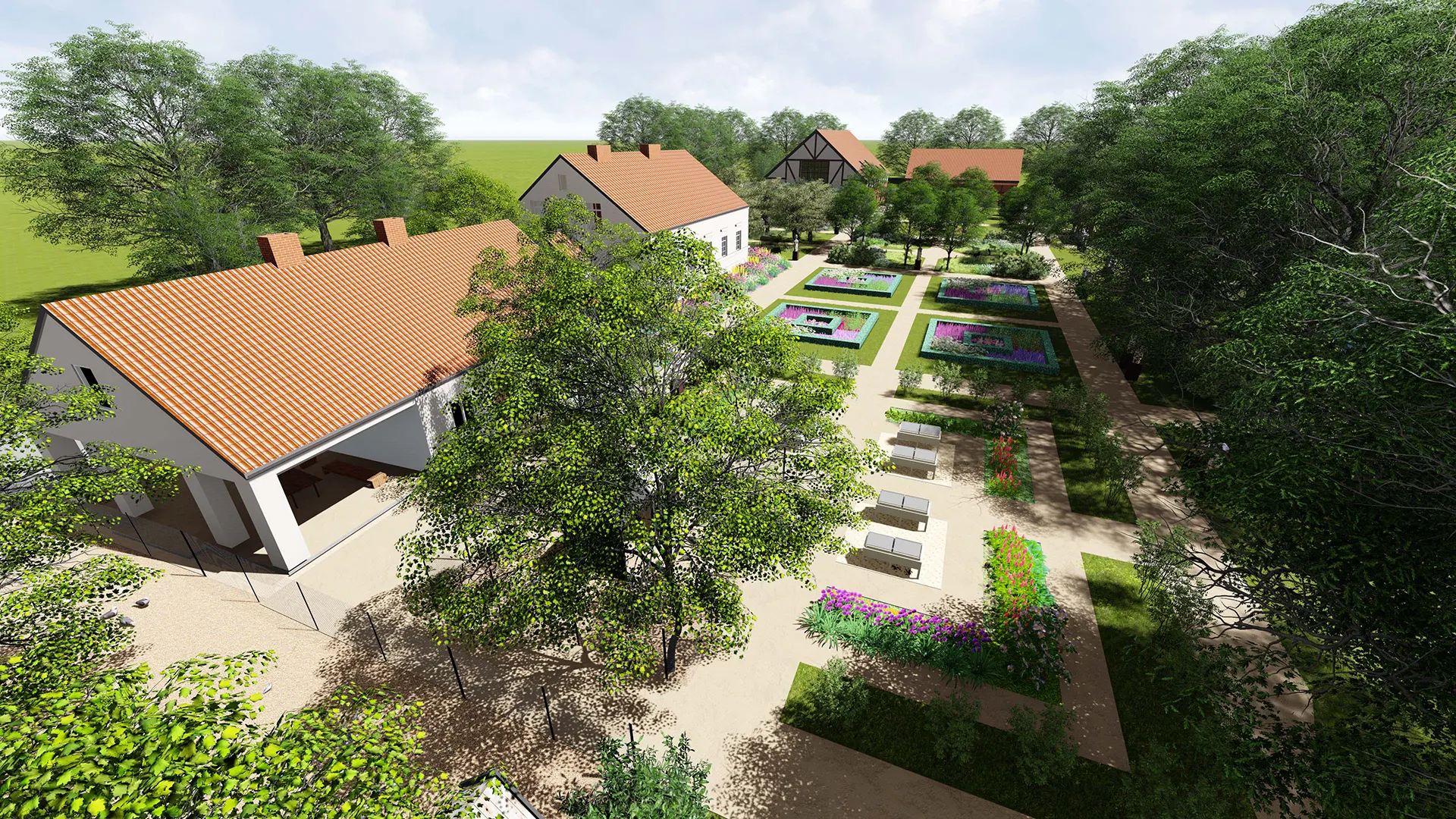
Water retention means keeping rainwater where it falls rather than allowing it to flow rapidly through gutters, ditches and canals into rivers and eventually the sea. Instead, the water is stored in the soil, vegetation, ponds and wetlands, where it is gradually released when needed.
The soil acts like a sponge. It absorbs excess water after heavy rainfall and gradually releases it during periods of drought.
Why is it so important now?
Climate change is creating two opposite challenges at the same time:
- Too much water at once – heavy rainfall and storms overwhelm drainage systems, causing flooding of streets and basements.
- Too little water – increasingly frequent heatwaves and droughts result in prolonged periods without rainfall.
Water retention helps address both challenges through the same natural process. Water stored in the ground reduces flood risk after heavy rainfall while providing moisture for vegetation and replenishing groundwater during dry periods.
How water retention affects the urban climate
Cooling the city. Water and vegetation act as natural air conditioning. As water evaporates from the soil and plants, it lowers air temperatures during hot weather. Areas with abundant greenery and water can be several degrees cooler than built-up areas dominated by concrete and asphalt, helping to reduce the urban heat island effect.
Reducing the carbon footprint. Wetlands, peatlands and healthy soils naturally absorb and store carbon dioxide, helping to mitigate climate change. Draining these areas releases stored carbon back into the atmosphere. Retaining water in the landscape therefore provides both local cooling and global climate benefits.
How water retention benefits nature
Supporting biodiversity. Wetlands and water bodies are among the richest habitats for wildlife, providing essential conditions for birds, amphibians, pollinators and many plant species.
Cleaner water. As water filters through soil and plant roots, pollutants are naturally removed before reaching rivers and groundwater.
Greater resilience during droughts. Maintaining stable water levels helps protect trees, green spaces and wildlife during prolonged dry periods.
What it means in practice – in Grudziądz
The "Let's Make a Difference" project includes practical investments designed to increase the city's capacity to retain water:
- Blue-green infrastructure – the revitalisation of parks, new planting schemes and additional greenery in streets and public spaces to increase rainwater infiltration.
- Blue-green acupuncture – small-scale solutions in densely built-up areas that capture and retain rainwater where it falls.
- Protection of the Trynka Canal embankments – flood prevention works aimed at reducing the risk of local flooding.
- The "Green School" Nature Education Centre at Lake Tarpieńskie – a place where residents can learn about water management, climate change and environmental protection.
These measures will reduce flood risk, create a cooler urban environment during heatwaves, increase green spaces, improve environmental awareness and enhance the quality of life for residents.
What you can do at home – small-scale water retention
Water retention starts with simple everyday actions:
- Collect rainwater in a barrel or storage tank and use it for watering your garden.
- Create a rain garden to allow rainwater from roofs and driveways to soak naturally into the ground.
- Reduce paved surfaces by replacing concrete or paving with permeable surfaces, lawns and vegetation wherever possible.
- Avoid directing roof water straight into the sewer system by allowing it to drain into green areas or rainwater storage tanks.
- Plant trees and shrubs, which help retain water and provide shade, naturally cooling the surrounding area.
In summary
Water retention means keeping water in the landscape instead of allowing it to drain away as quickly as possible. The benefits include reduced flood and drought risk, cooler cities, lower carbon emissions, cleaner water and healthier ecosystems. It is one of the most effective and cost-efficient ways of helping cities adapt to climate change, and every resident can contribute.